|
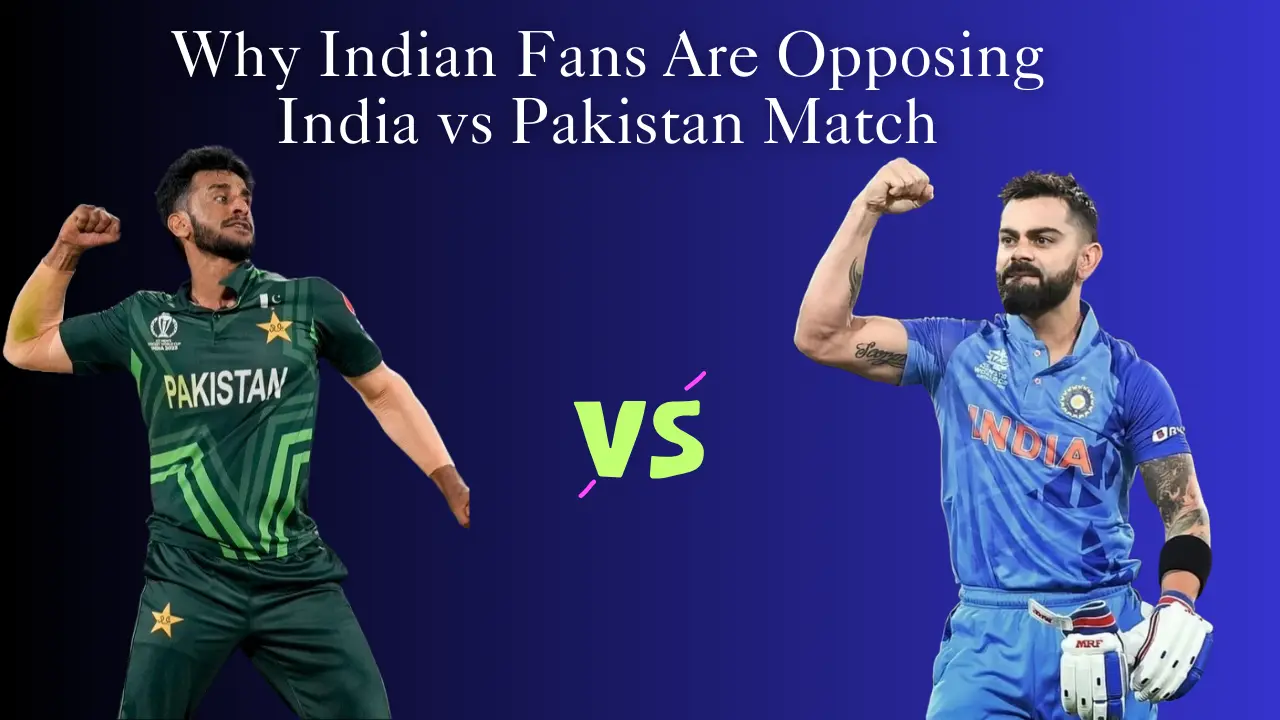
The India vs Pakistan cricket rivalry has always been one of the most iconic matchups in world sports. Historically, these games have drawn record-breaking viewership, creating an unparalleled level of excitement and anticipation. However, the Asia Cup 2025 edition has sparked a very unusual reaction in India—many fans are openly questioning, and even opposing, the idea of India facing Pakistan on the field.
This sentiment marks a rare deviation from the usual hype that accompanies India vs Pakistan clashes. But why is the Indian public showing such resistance? Let’s explore the reasons in detail.
1. Political Tensions Between India and Pakistan
One of the most significant reasons behind the public opposition is the strained political relationship between the two countries. Over the years, conflicts at the diplomatic and military levels have created strong anti-Pakistan sentiment among sections of the Indian population.
The Asia Cup 2025 match, therefore, isn’t viewed purely as a sporting event; it’s entangled with national pride and political identity.
2. Social Media Amplification and Public Opinion
Social media has played a huge role in shaping public perception. Platforms like Twitter, Instagram, and X are filled with debates, hashtags, and posts calling for India to boycott matches against Pakistan.
This digital amplification gives the impression that a large portion of the public is firmly against the encounter, even if opinions vary across regions and demographics.
3. Concerns About Player Safety and Security
Another reason why the Indian public is hesitant is security concerns. The India vs Pakistan matches, especially in high-stakes tournaments like the Asia Cup 2025, attract massive crowds and intense media scrutiny.
Even though cricket boards take every precaution, public perception of risk plays a role in opposition.
4. Over-Saturation of the Rivalry
While India vs Pakistan matches have historically been rare, the modern cricket calendar sometimes feels oversaturated. Frequent T20 tournaments, bilateral series, and overlapping competitions have diluted the uniqueness of the rivalry.
This overexposure has contributed to a surprising lack of enthusiasm in some segments of the Indian audience.
5. Controversies and Distrust Towards Cricket Boards
The BCCI (Board of Control for Cricket in India) has also come under criticism regarding its handling of international cricket.
This skepticism amplifies negative sentiment and reduces excitement for the game.
6. Emotional Backlash from Past Controversies
Past India vs Pakistan matches have had incidents that left a bitter taste among fans:
These emotional backlashes linger in public memory, influencing opinions about future encounters. The Asia Cup 2025 clash, therefore, faces an uphill battle to win over hearts before the first ball is bowled.
7. The Moral Debate: Should Cricket Cross Political Boundaries?
For some segments of Indian society, there’s a moral question: “Should we play cricket with a nation viewed as hostile?”
This moral argument has a significant influence, especially among younger fans who are active on social media and politically aware.
Conclusion: A Complex Mix of Sentiments
The opposition to the India vs Pakistan Asia Cup 2025 match is not a result of a single factor. It is a combination of politics, security concerns, social media amplification, emotional memory, overexposure, and skepticism toward cricket authorities.
While cricket has traditionally been a unifying force that transcends borders, in this case, the match is heavily weighed by real-world tensions and public sentiment. Fans may or may not attend the game in the same spirit of excitement as before, and the boards must navigate this complex landscape carefully.
Despite the controversy, history shows that once the first ball is bowled, emotions on the field can redefine narratives. However, the opposition from the Indian public adds a layer of tension and uncertainty unprecedented in India vs Pakistan encounters.

With chances, training, and international aspirations in mind, here is the place where budding cricket players excel.
Don’t miss subscribing to our News feeds, kindly fill out the form below.
© 2023 - 2025 T20 Gully Cricket | All rights reserved | Develop by